Weather in Luxor and what to wear
Luxor gets almost no rain. Winter days are warm and the mornings cold, summer afternoons pass 40 °C, and the tombs are warm inside in every season. Clothes that cover shoulders and knees work for all of it.
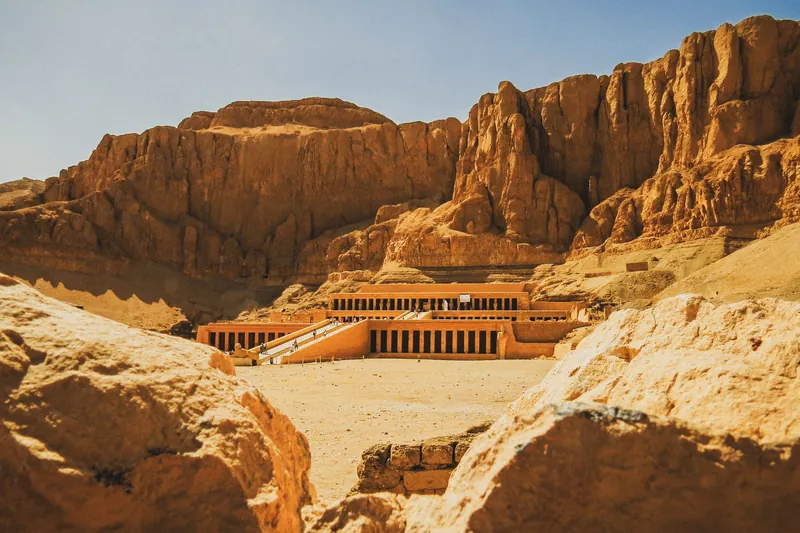
Luxor lies in the desert of Upper Egypt, and the weather follows a simple pattern: dry all year, mild in winter, very hot in summer. Long-term records for the Luxor weather station show an average of about 8 mm of rain a year. These figures come from an independent climate database rather than the Egyptian Meteorological Authority, so read them as guide values.
Temperatures through the year
January is the coolest month, with average highs of about 23 °C and lows of about 7 °C. February is a little warmer, and by March the highs reach about 30 °C. April averages 35 °C, May 39 °C, and from June to August the average high sits around 41 °C, with average lows around 25 °C. September is still close to 40 °C. October brings the highs back to about 36 °C, November to 29 °C and December to 24 °C.
The difference between night and day is largest in winter. A December morning on the West Bank can start below 10 °C and end the afternoon in the mid twenties. An operator of the sound and light show at Karnak describes winter evenings at 15 to 20 °C, so a jacket is useful after dark too.
Heat in the tombs and on the paths
The tombs are warm inside, and one guide noted that some were very warm even in December. The warm layer you want outside at 7:00 is one you will carry in your hand inside, so dress in layers. The valley is busiest from about 10:00 to 14:00, which is also the hottest part of the day; arriving at 6:00 helps on both counts.
Daylight through the year
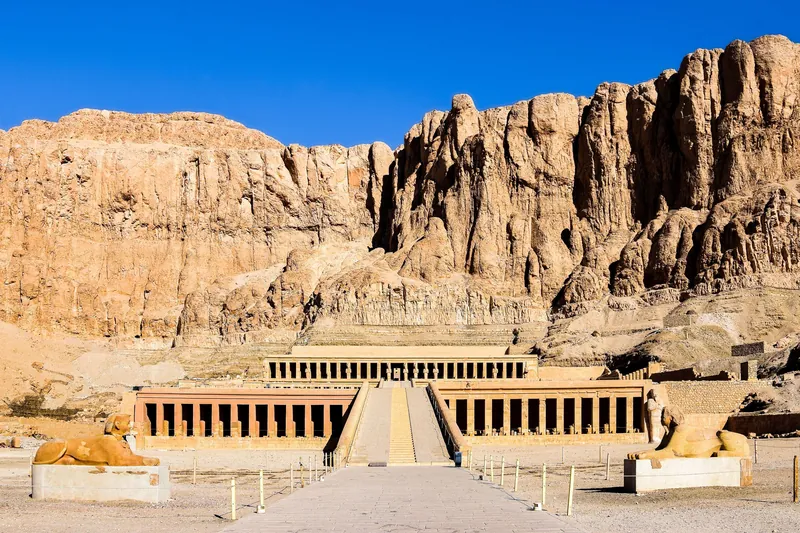
Days are shorter in winter than many visitors expect. On 21 December the sun rises at about 6:32 and sets at about 17:04, giving roughly ten and a half hours of light. On 21 June, with summer time, it rises at 5:59 and sets at 19:44. These times assume a flat horizon; in the Valley of the Kings and below the cliffs of Deir el-Bahari the rock walls hide the sun for longer in the morning and evening. In winter, plan to finish the West Bank by late afternoon, and in summer use the light evenings for the East Bank instead of the midday hours.
Wind and sand
The German Foreign Office notes that sandstorms can occur in Middle and Upper Egypt, mainly in spring. Balloon operators report that the Khamsin wind grounds flights most often in March and April. Sunglasses and a scarf you can pull over your mouth make a windy day on the West Bank easier.
What to wear
The monuments have no formal dress code, but modest clothing that covers shoulders and knees is the usual advice, and it keeps the sun off your skin as well. Luxor Temple contains a working mosque, the Abu Haggag Mosque; in mosques women cover their hair and everyone takes off their shoes. Comfortable shoes make sense for a day spent walking from tomb to tomb.
Plan for these on a West Bank day:
- a warm layer for early starts between November and February
- a hat and sunglasses
- water, as the sites are far apart
- a bank card and some Egyptian pounds for tickets, the tram and toilets
- a small torch, which an older guide recommends for the reliefs in dim tombs
A sunrise balloon flight in winter starts with a pickup before dawn, when the temperature is close to the night-time low, so wear the warm layer and take it off once the sun is up. Balloon flights add their own rules: one deluxe flight does not allow luggage or large bags in the basket, so leave the day bag at the hotel. If you plan to swim, keep to the pool. The German Foreign Office advises against bathing in fresh water in the Nile Valley because of bilharzia.
Cameras and health
The UK government reminds visitors that photographing military sites is illegal anywhere in Egypt and that professional equipment needs a permit. It also advises checking which vaccinations you need at least eight weeks before the trip, and lists dengue and tick-borne diseases among the health risks in Egypt. For the months in more detail, see the best time to visit, and for families the page on the Valley of the Kings with kids.
Questions travellers ask
How cold does it get in Luxor in winter?
In December and January the average night-time low at the Luxor station is around 7 to 9 °C, while daytime highs reach 23 to 25 °C. Early starts for a balloon flight or the West Bank are cold, so bring a warm layer.
Is there a dress code for the Valley of the Kings?
The monuments have no formal dress code. A local portal recommends modest clothing that covers shoulders and knees, which also helps against the sun. In mosques women cover their hair and everyone takes off their shoes.
Is it hot inside the tombs?
Yes. The tombs tend to be warm, and some are very warm even in December. Light clothing that breathes is better than a heavy jacket once you are inside.
Does it rain in Luxor?
Hardly ever. The long-term average for the Luxor station is about 8 mm a year. Rare thunderstorms can cause flash floods in the desert valleys, which in antiquity buried several tombs under debris.
Can I swim in the Nile?
The German Foreign Office advises against bathing in fresh water in the Nile Valley because of the risk of bilharzia. Keep to hotel pools.
Where these facts come from
Dates, opening hours and rules change. We checked these pages in October 2026; the official source has the final word.
- Weather and Climate: Climate of Luxor (station 62405)
- Auswärtiges Amt: Ägypten, Reise- und Sicherheitshinweise
- UK Foreign, Commonwealth and Development Office: Egypt, health
- UK Foreign, Commonwealth and Development Office: Egypt, safety and security
- US Naval Observatory: sun and twilight times, Valley of the Kings
- EarthTrekkers: Valley of the Kings, the complete guide for 2026
- Explore Luxor: FAQ (June 2026)
- Wikivoyage: Valley of the Kings